
Senior Consultant Colorectal & General Surgeon

Colorectal surgery, with a gentler, smoother recovery.

Over twenty years of experience, clear answers, and minimally invasive surgery planned around how you actually heal, whether the patient is you or an elderly parent.

Meet Dr Lee
Mount Elizabeth Novena  ·  Mount Alvernia  ·  Parkway East  ·  Gleneagles  ·  Farrer Park
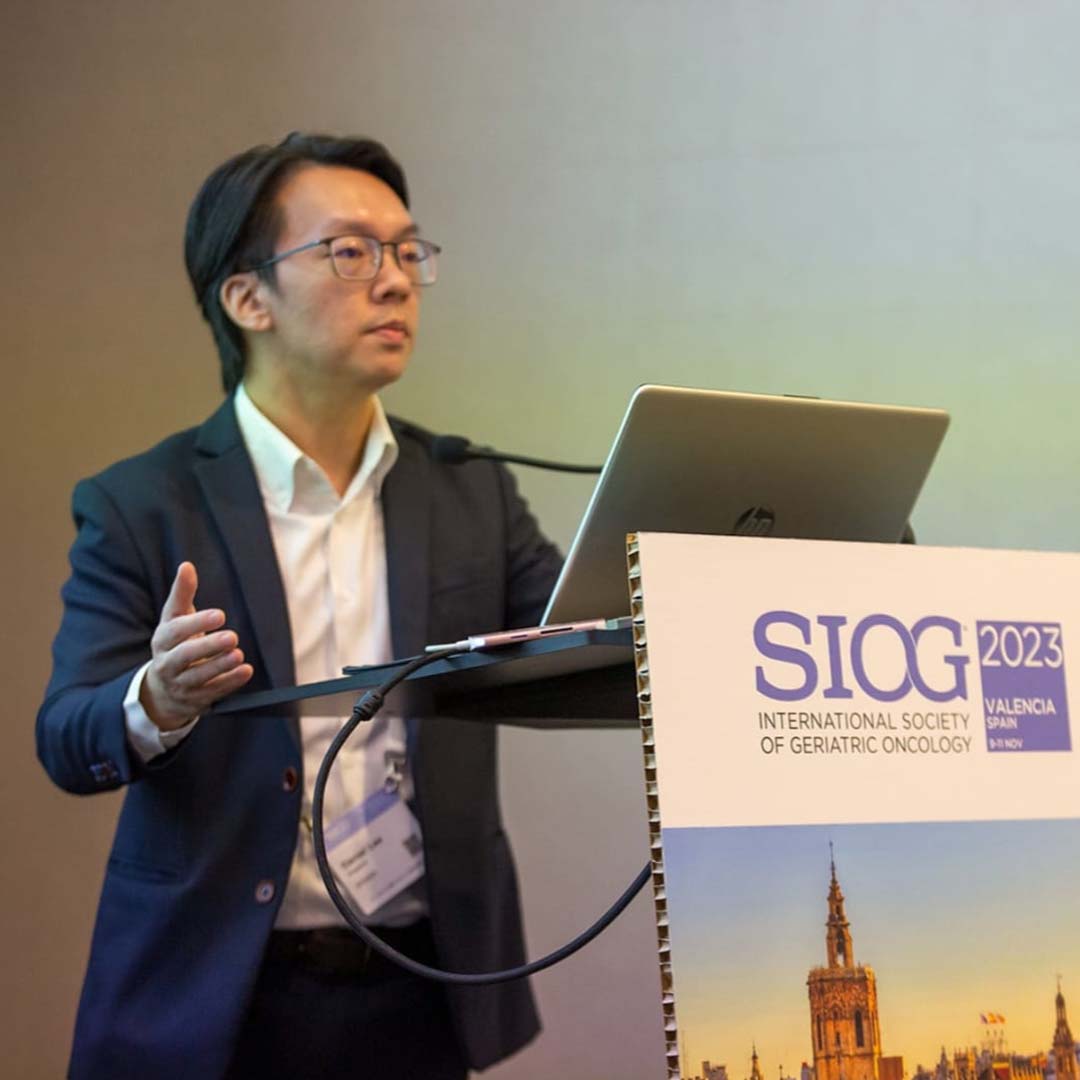
Dr Daniel Lee, colorectal and general surgeon
20+Years in surgery
FRCS (Edinburgh)
Fellow, Royal College of Surgeons of Edinburgh
Fellowship, Leeds
Colorectal fellowship, John Goligher Unit, St James's University Hospital
Ex-Head, KTPH
Former Head of Colorectal Surgery and Surgical Lead, Geriatric Surgery
Faculty, NUS
Adjunct Senior Clinical Lecturer, NUS and Lee Kong Chian School of Medicine
Why patients come to Dr Lee

The honest, unhurried care you were hoping to find.

Recovery is planned, not left to chance

Minimally invasive techniques and a clear recovery plan are chosen for your situation, so going home is smoother and getting back to normal life is the goal from day one.

Nothing to be embarrassed about

Colorectal problems are far more common than most people think. You will be met without judgement, in a private and respectful setting, and given time to ask anything.

A surgeon who understands older patients

For an elderly parent, the right approach is not the same as for a forty year old. Dr Lee built dedicated geriatric surgical care, including prehabilitation and family-centred decisions.

From diagnosis to recovery

How Dr Lee treats colorectal cancer, one stage at a time.

The six stages of treatment, set out the way Dr Lee explains them in the consulting room. Open whichever stage matters to you right now.

Part 1Knowing when to get checked

Could it be colorectal cancer?

Most people with these symptoms turn out not to have cancer. The only way to know is to look, and each of the signs below is worth a conversation rather than a wait.

Signs worth checking

  • Bleeding from the back passage
  • A change in your bowel habit that does not settle
  • Losing weight without trying to
  • Feeling tired from a low blood count, called anaemia
  • Tummy pain that keeps coming back

What Dr Lee will talk through

  • How common colorectal cancer is in Singapore
  • Why it is being found more often in younger adults
  • The difference between routine screening and testing because of a symptom
  • When it is worth seeing a colorectal surgeon rather than waiting
The one thing to remember

Symptoms like these usually turn out to be something simpler. Checking early is what keeps the options open.
Part 2What happens after something is found

Understanding the diagnosis

Nothing is treated before it is understood. A camera test, a small tissue sample and the right scans show exactly what is there, and just as importantly, what is not.

Finding the answer

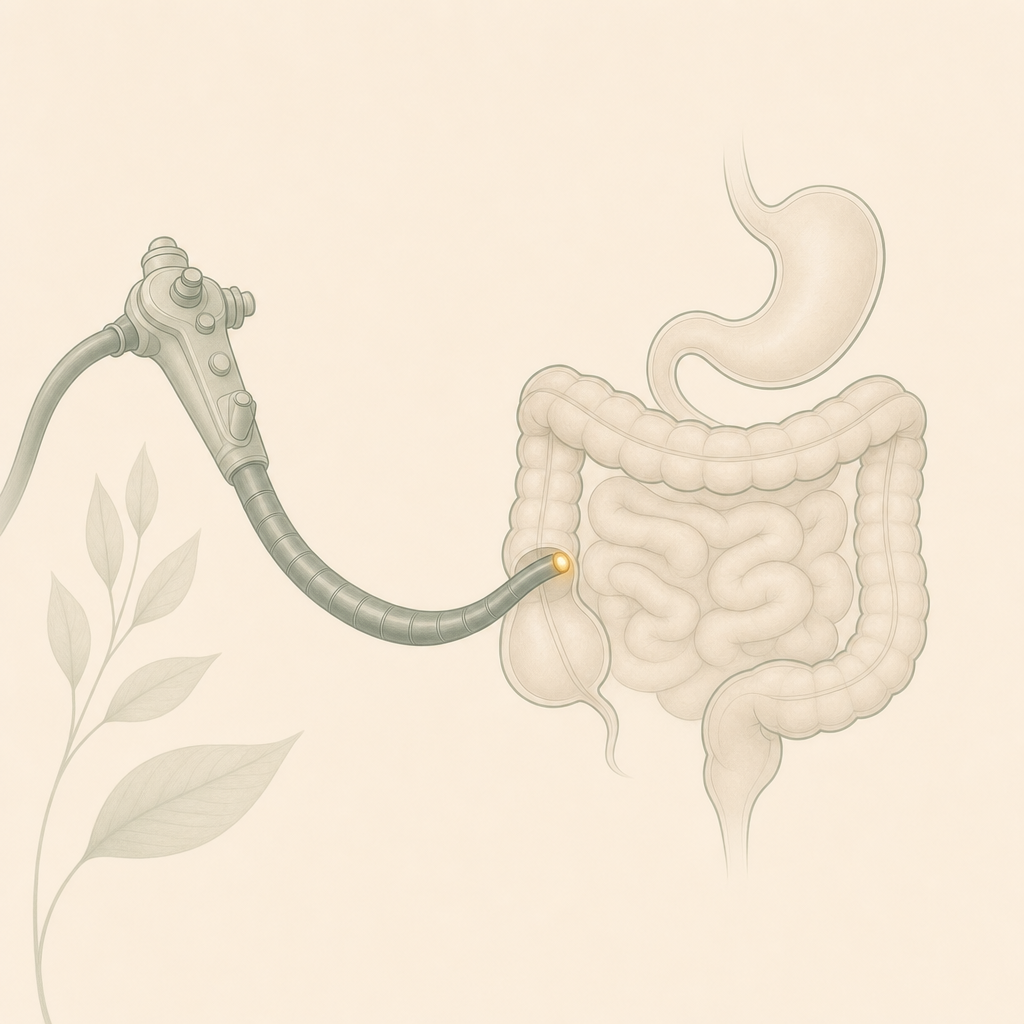
  • A colonoscopy, which is a camera test of the large bowel
  • Taking a small sample, called a biopsy, to check under the microscope
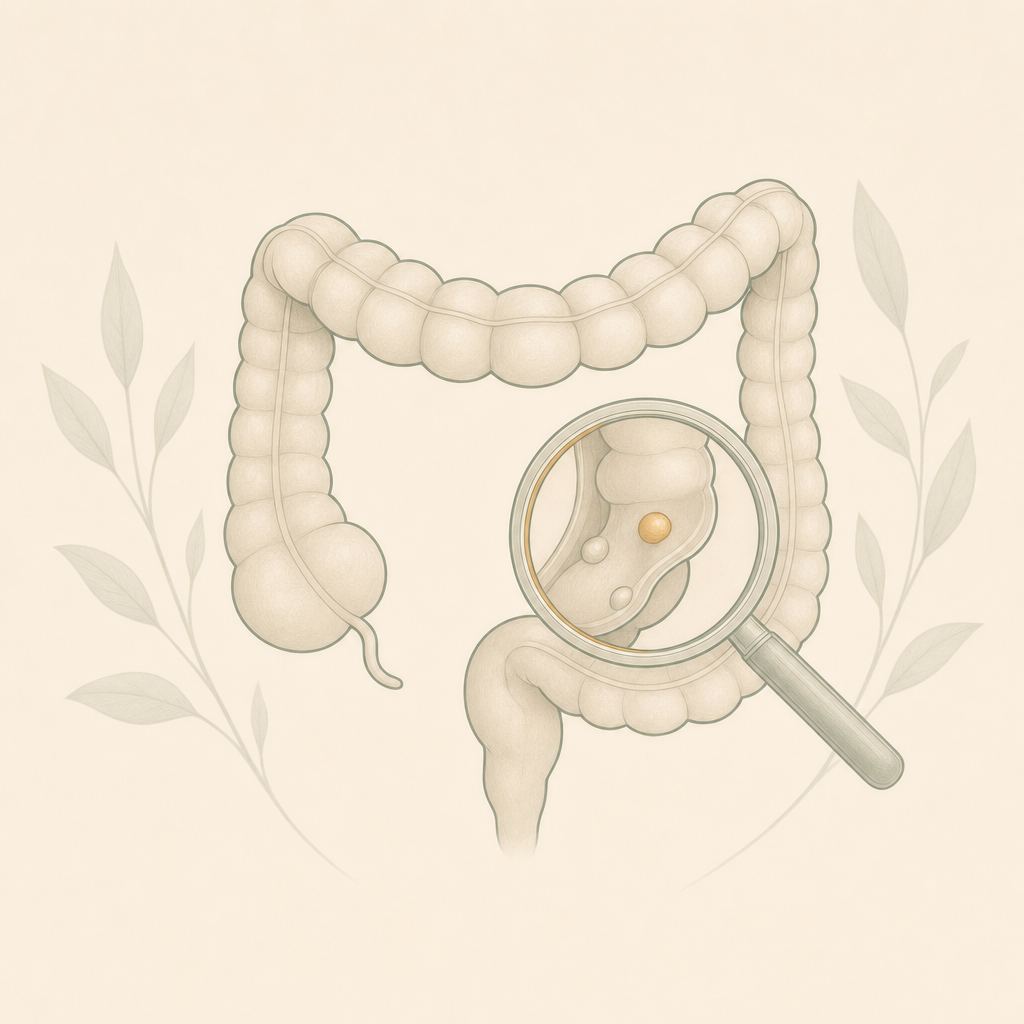
  • What it means when a polyp, a small growth, is found
  • Which polyps can be removed during the camera test itself

When an operation is the better option

  • The growth is too large to take out through the camera
  • It sits somewhere difficult to reach
  • The sample suggests it needs more than a simple removal

Working out the stage

  • A CT scan, to look at the rest of the body
  • An MRI scan, used for rectal cancer
  • An ultrasound taken from inside the back passage, for early rectal tumours
  • A PET scan in selected cases
  • What stages one to four actually describe
The one thing to remember

Two people with the same diagnosis can need very different treatment. Knowing the stage first is what makes the plan yours.

Part 3Building strength before the operation

Getting ready for surgery

Surgery is more than the operation itself. The weeks beforehand are used to build strength, improve nutrition and get other health conditions steady. This is called prehabilitation, and the aim is simple: go into the operation as strong as possible.

Why this matters more for older patients

  • General frailty
  • Muscle loss that comes with age, called sarcopenia
  • Managing several health conditions at the same time

What prehabilitation involves

  • Exercise, built up gradually
  • Eating better, with guidance on what actually helps
  • Getting conditions like diabetes or blood pressure under control
  • Stopping smoking
The one thing to remember

A lot of the work that makes an operation go smoothly happens in the weeks before it.

Part 4Choosing the approach that fits

The operation itself

The goal never changes. Remove the cancer completely, and protect how the bowel works afterwards. What has changed is how that can be done.

How the operation can be done

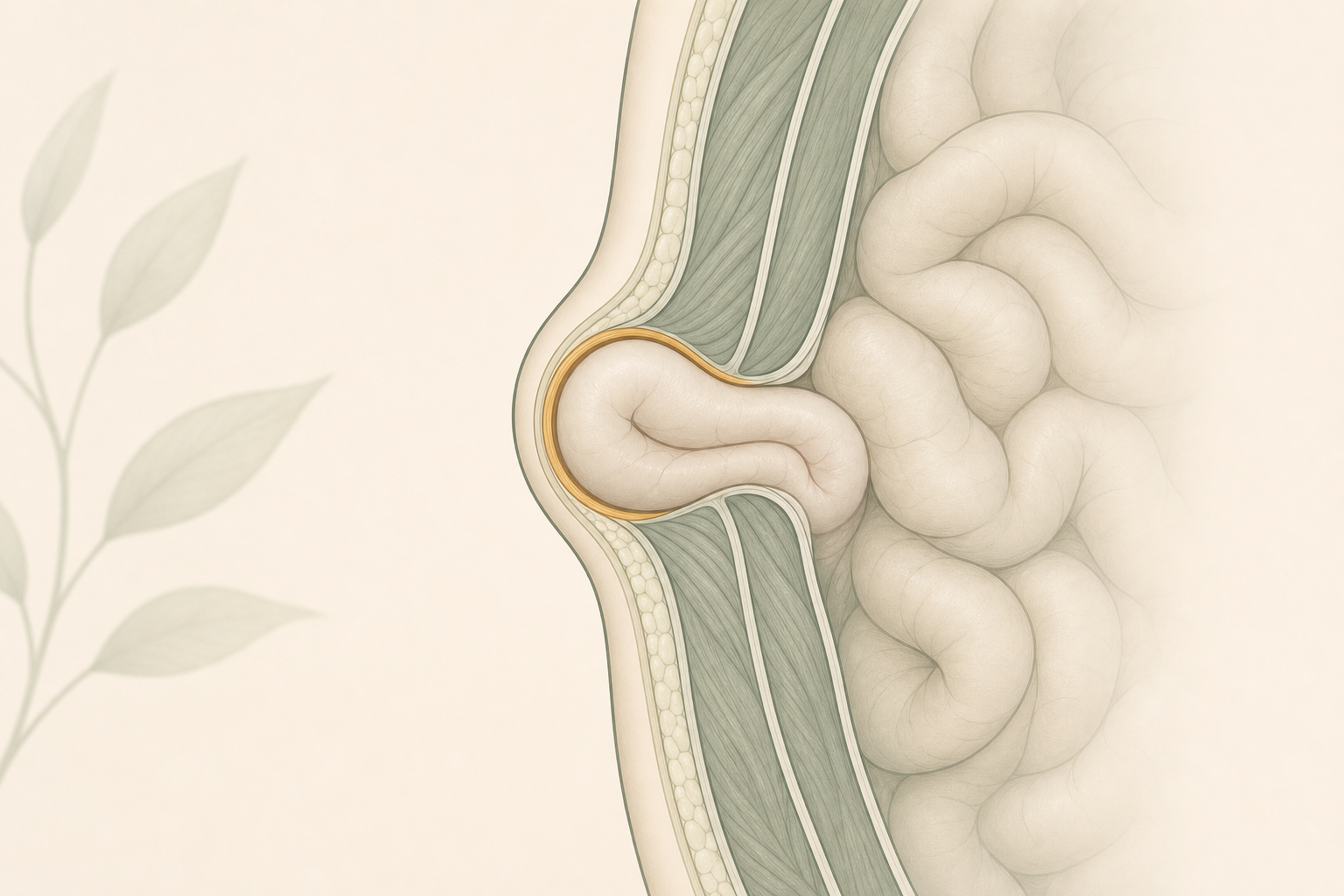
  • Keyhole surgery, through a few small cuts instead of one long one
  • Through the natural opening, with no cuts on the tummy at all. This suits some early rectal tumours that are small and sit low down, and Dr Lee will tell you if you are suitable
  • Why keyhole is not always the safest choice. It is the usual approach, but open surgery is the right tool when the tumour is large, has grown into nearby organs, or the operation is an emergency. Choosing it is not a step backwards
  • A small tube, called a stent, to relieve a blocked bowel when that has to be sorted out first

What smaller cuts usually mean

  • Less pain afterwards
  • A shorter stay in hospital
  • Getting back to normal activities sooner
The one thing to remember

The right operation is the one that removes the cancer properly. Everything else is chosen around that.

Part 5Recovery starts straight away

Recovering after surgery

Bed rest and an empty stomach used to be normal after bowel surgery. Not any more. Enhanced Recovery After Surgery, usually shortened to ERAS, is a planned routine that gets you eating, moving and off drips sooner.

What recovery looks like now

  • Drinking and eating on the day of the operation or the day after
  • Getting out of bed and walking early
  • Pain relief that combines several methods, so less morphine is needed
  • Avoiding tubes and drains wherever they are not needed
  • Knowing what to expect each day, so progress is easy to see
The one thing to remember

Recovery is something you take part in, not something that happens to you.

Part 6Finishing treatment, and staying well

After the operation

For some people the operation is the whole treatment. For others it is one part of a longer plan, with follow-up that carries on for years.

Treatment that can come with surgery

  • Why some people need more treatment after the operation and others do not
  • Chemotherapy given after surgery
  • Chemotherapy or radiotherapy given before surgery, to shrink the tumour first
  • Doing all of the chemotherapy and radiotherapy before the operation instead of splitting it either side, so the whole treatment is finished while you are at your strongest

Watch and wait, for some rectal cancers

  • Some rectal cancers respond so well to chemotherapy and radiotherapy that no visible tumour is left
  • In carefully selected patients, we can hold off surgery and instead check the area very regularly with scopes and scans
  • If the cancer ever shows signs of returning, we operate then
  • This is only safe with close, disciplined follow-up

Follow-up afterwards

  • Repeat colonoscopies
  • CT scans
  • Blood tests that track tumour markers
  • Help with eating, bowel habits and getting back to normal life
The one thing to remember

Care does not stop when the operation is over. The follow-up is part of the treatment.

Wherever you are in this, you do not have to work it out on your own. A consultation is a conversation about your situation and the choices in front of you.

Geriatric colorectal care

He built geriatric surgical care, not just practises it.

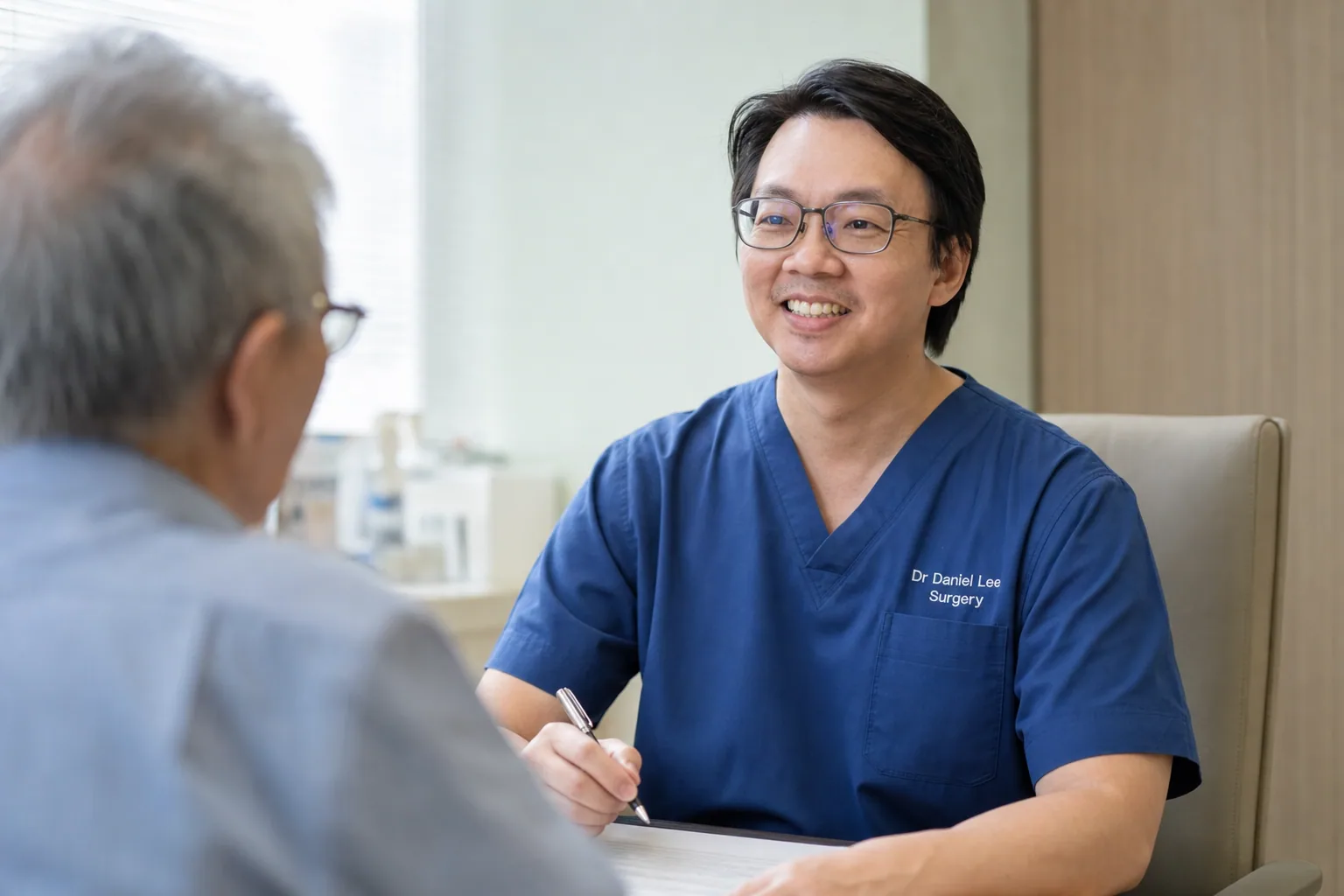
As the former Surgical Lead for Geriatric Surgery at Khoo Teck Puat Hospital, Dr Lee developed prehabilitation programmes, introduced muscle-strength screening, and changed how teams talk with families when an older patient needs surgery.

For families choosing a surgeon for a parent, that experience is the difference between a procedure and a recovery.

Dr Daniel Lee in surgical scrubs during a geriatric consultation
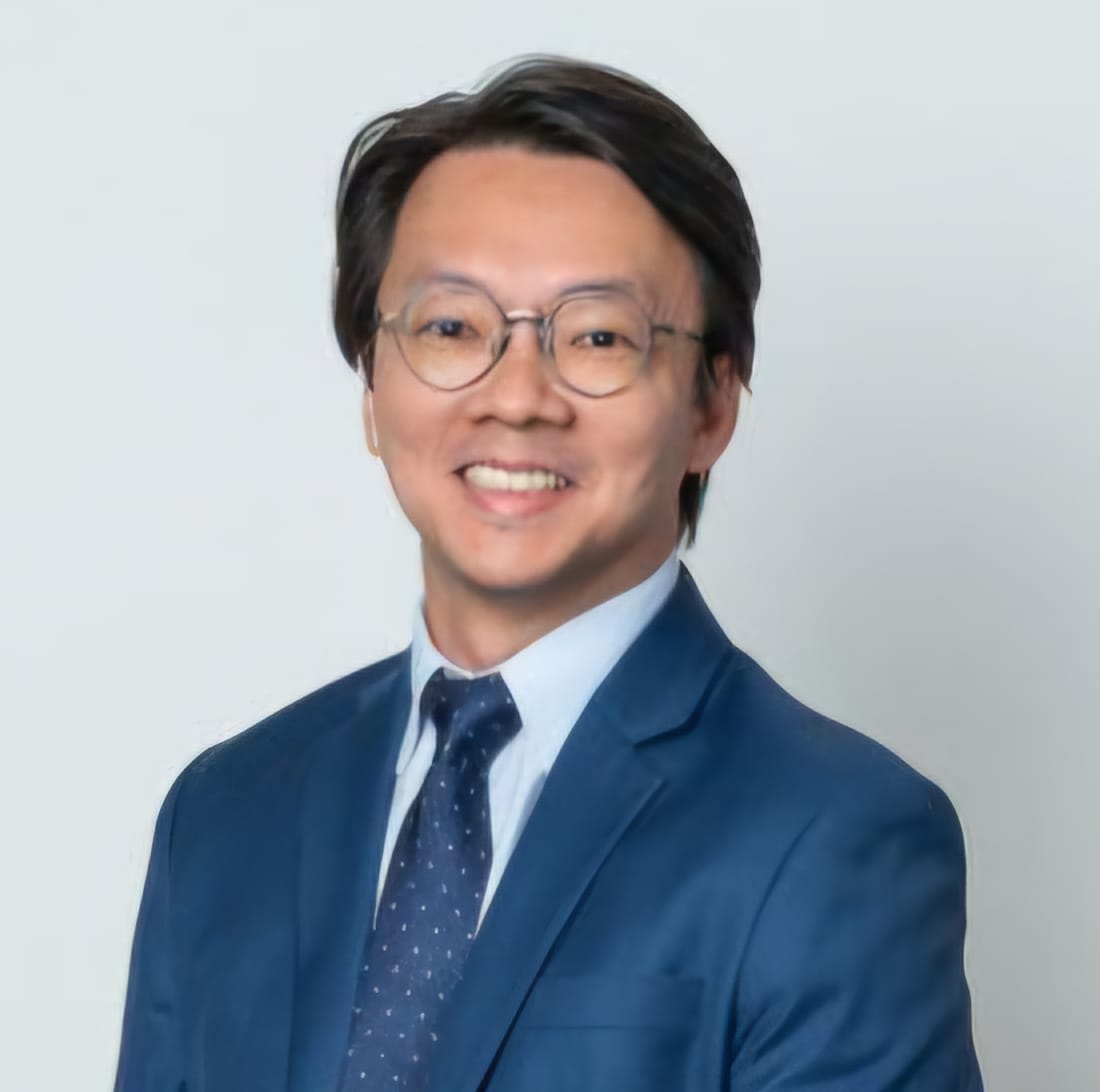
Portrait of Dr Daniel Lee
About Dr Daniel Lee

These are conditions people suffer with in silence for years. The first job is to make it easy to ask for help.

Dr Daniel Lee is a senior colorectal and general surgeon who has spent his career making difficult conversations easier and recovery gentler, across both public hospital leadership and private practice.

  • MD (University of Putra Malaysia), MMed Surgery (Singapore), MRCS and FRCS (Edinburgh), FAMS
  • Colorectal fellowship at the John Goligher Unit, St James's University Hospital, Leeds
  • Former Head of Colorectal Surgery and Surgical Lead for Geriatric Surgery, Khoo Teck Puat Hospital
Where to find Dr Lee

Consulting across five private hospitals.

Mount Elizabeth Novena holds the main consulting rooms, with clinics also at Mount Alvernia, Parkway East, Gleneagles and Farrer Park.

Insurance & MediSave

Care you can plan for, with the paperwork handled.

We help you make the most of MediSave and assist with claims across the major Integrated Shield Plans and corporate panels.

Fees and next steps

Clear costs, and a smoother way forward.

Fees are explained upfront, including what MediSave can cover. If you have a colorectal concern, or you are researching for a family member, we welcome the chance to help.